
Tire Repair Kit: What It Is, How It Works and When to Use One
More new cars leave the factory without a spare, and a tire repair kit sits in its place. Other drivers buy a plug kit for the trunk after one bad afternoon on the side of McKnight. Either way, these kits are useful, but they are not magic. If a screw is the problem, start with our post on whether you can drive with a nail in your tire. This guide explains the two main types, how to use them, how far you can drive afterwards and when you should skip the kit and head straight to a shop. It comes from what we see in our NE Calgary bay: plenty of tires that a kit saved, and a few that a kit could never have saved.
What Is a Tire Repair Kit?
A tire repair kit is an emergency tool that seals a small puncture well enough to get you off the road and to a tire shop. There are two families, and they work in completely different ways.
Plug Kits
A plug kit closes the hole from the outside. You ream out the puncture, then push a sticky rubberized string through it with an insertion tool. The string fills the hole and the tire's own pressure holds it in place. It is quick, cheap and does not make a mess, but it only works when you can find the puncture and the tire can be taken off the ground or rolled to reach it.
Inflator and Sealant Kits
This is what many manufacturers now include instead of a spare. A small 12-volt compressor pumps liquid tire sealant into the tire through the valve stem, then inflates it. As the tire turns, the sealant spreads and plugs the leak from the inside. You do not need to find the hole or remove the wheel, which makes it easier for most drivers.
What Comes in a Typical Kit?
Contents vary by brand, but here is what we usually find when customers show us theirs:
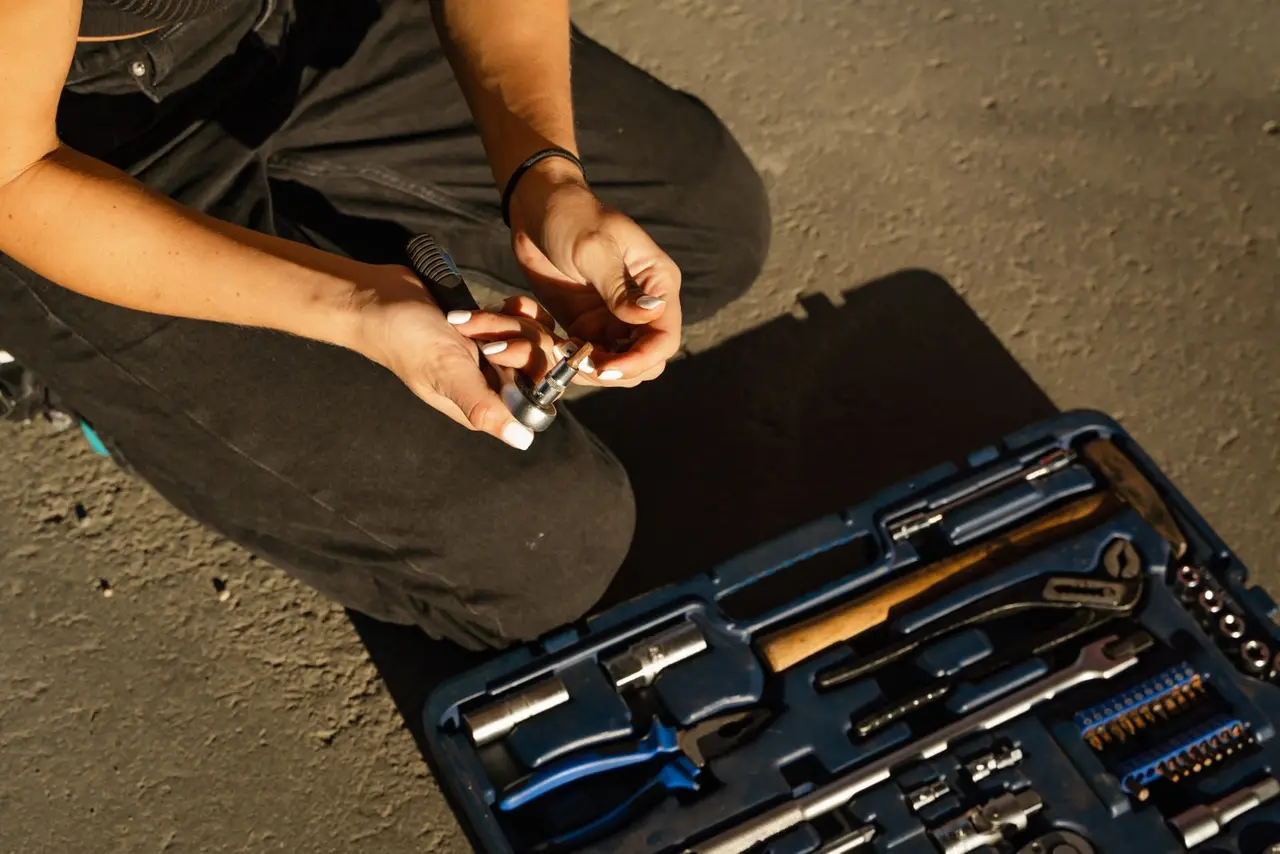
- Plug kit: a spiral reamer (rasp), an insertion needle with a split eye, a pack of plug strings, sometimes rubber cement, and a knife to trim the excess.
- Inflator kit: a sealant bottle or cartridge with a hose, a compressor that plugs into the 12-volt outlet, a pressure gauge and a speed-limit sticker for the dash.
- Useful extras: pliers to pull the nail, gloves, a flashlight and a separate pencil gauge, because the built-in compressor gauges are not always accurate.
Do Tire Repair Kits Actually Work?
For the right damage, yes. A screw or nail in the tread area, up to about 6 mm across, is exactly what they are designed for. They will not help with a sidewall cut, a torn bead, a large gash from debris on Deerfoot or a tire that has come off the rim. Sealant also struggles in deep cold, when it thickens and spreads slowly, so a -25°C morning is not the ideal time to rely on it.
Neither type is a permanent fix. A string plug has not been inspected from the inside, and sealant leaves a coating that has to be cleaned out before a proper repair. Sealant can also gum up the tire pressure sensor inside the wheel. Always tell the shop you used a kit so they can clean the tire and check the sensor before remounting. Our tire FAQ answers more of the questions we hear about repairs.
How to Use a Tire Repair Kit
Before you start, pull off the road to a safe, level spot, turn on your hazards and set the parking brake. Then follow the steps for your kit.
Using a Plug Kit
- Find the puncture. Look for the nail or spray soapy water and watch for bubbles.
- Pull the object out with pliers and note the angle it went in.
- Push the reamer in and out of the hole several times at the same angle to clean and rough it up.
- Thread a plug string through the needle eye so it sits evenly on both sides.
- Push the needle into the hole until about a third of the string is left outside, then pull the tool straight out.
- Trim the string flush with the tread, inflate to the pressure on your door sticker and check for bubbles.
Using an Inflator and Sealant Kit
- Leave any nail in place unless the kit instructions say otherwise.
- Connect the sealant hose to the valve stem and plug the compressor into the 12-volt outlet with the engine running.
- Switch it on and let it push the sealant in, then keep inflating to the pressure on your door sticker.
- Drive gently for a few kilometres so the sealant spreads, then stop and re-check the pressure.
- If the pressure keeps falling, stop. The damage is too big for the kit.
How Far Can You Drive After Using a Kit?
Treat any kit as a ticket to the nearest tire shop, not to Banff. Sealant kits usually carry a speed limit, often around 80 km/h, and a distance limit printed on the kit or the dash sticker. A plug can hold for a while, but nobody has checked whether the inner liner was damaged when the tire went soft. Our advice at the counter: stay off the highway if you can, check the pressure again after a short drive and get a proper flat tire repair within a day or two.
Repair Kit vs Spare Tire: Which Is Better?
Both have a place. Here is how they compare for a typical Calgary driver:
| Factor | Tire repair kit | Spare tire |
|---|---|---|
| Damage it can handle | Small tread punctures only | Almost any flat, including sidewall damage and blowouts |
| Time to use | About 10 to 15 minutes | About 15 to 30 minutes |
| Tools and effort | No jacking for sealant; plug kits need some strength | Jack, lug wrench and some physical effort |
| Space and weight | Small and light | Takes up trunk space and adds weight |
| Speed after use | Limited, usually around 80 km/h | Compact spare limited; full-size spare normal |
| Effect on the tire | Sealant must be cleaned out before a proper repair | Damaged tire untouched until inspected |
| Effect on TPMS | Sealant can foul the sensor | No effect, though the spare may have no sensor |
| Cold-weather use | Sealant thickens in deep cold | Works in any temperature |
If your car has room for a spare, we suggest keeping both: the kit for a nail on the way to work, the spare for anything worse. Our guide on how to change a flat tire walks through the spare swap step by step.
When to Skip the Kit and Call a Pro
Put the kit away and call for a tow or roadside assistance when:
- The damage is in the sidewall or shoulder, or there is a visible bulge.
- The hole is larger than a pencil or is a cut rather than a round puncture.
- The tire has come off the bead or the rim is bent.
- You have already driven on it flat and can smell or see rubber damage.
- The pressure keeps dropping after the kit has been used.
If the tire cannot be saved, we can fit a matching new tire or an inspected used tire the same visit, and check the pressure sensor through our TPMS sensor service if sealant got into it.
We Can Help After a Roadside Repair
Used a plug or a can of sealant to get home? Bring it to 227 41 Ave NE, Monday to Saturday, 9 to 6. We take the tire off the rim, clean it out, inspect the inside and do a proper plug-patch if it is safe. Call (587) 894-3516 with any questions.
FAQ: Tire Repair Kits
What is the best tire plug repair kit to keep in the car?
Look for a tire plug kit with a T-handle reamer and insertion tool, plenty of plugs and a small 12-volt tire inflator kit. The tools matter more than the brand. A plug is still only a way to get home.
Is a tire plug kit a permanent fix?
No. A plug from a tire plug kit seals from the outside only. Have the tire removed, inspected and repaired from the inside as soon as you can.
Is a tire plug a permanent repair?
An outside-only plug from a roadside kit should be treated as temporary. Nobody has inspected the inside of the tire, and the inner liner is not sealed. A lasting repair means removing the tire from the rim, checking for hidden damage and installing a one-piece plug-patch from the inside, within accepted size and location limits.
Will tire sealant damage my TPMS sensor?
It can. Liquid sealant coats the inside of the tire and wheel, and it can clog the small port on a tire pressure sensor. Not every case causes a problem, but the sensor should be cleaned and checked when the tire is repaired. Tell the shop you used sealant so they know to look before remounting.
Can I use a tire repair kit in winter?
Plug kits work in the cold, although the strings stiffen and are harder to push in. Sealant thickens at low temperatures and may not spread well, especially below about -20°C. If you rely on an inflator kit, keep the car running for warmth, follow the instructions closely and have a backup plan such as roadside assistance.
How long does a tire plug last?
Some roadside plugs hold for a long time, but there is no way to know without inspecting the tire from the inside. Moisture and road salt can travel through the puncture into the steel belts. We recommend having a plugged tire checked and properly repaired within a few days, rather than leaving the plug in for the season.
Can a shop repair a tire after I used sealant?
Usually, yes. The shop removes the tire from the rim, cleans the sealant out of the tire and off the wheel, then inspects and repairs the puncture as normal. It takes a little more time than a clean tire. If the damage was outside the repairable area, the tire will need replacing regardless of the sealant.
Should I buy a repair kit if my car has a spare?
It is a useful backup. A kit can handle a simple nail in the tread without jacking the car up on a busy road, and the spare stays ready for bigger damage. Learn how to use both before you need them, and check the sealant expiry date and spare pressure a couple of times a year.