
When to Put Winter Tires On in Calgary
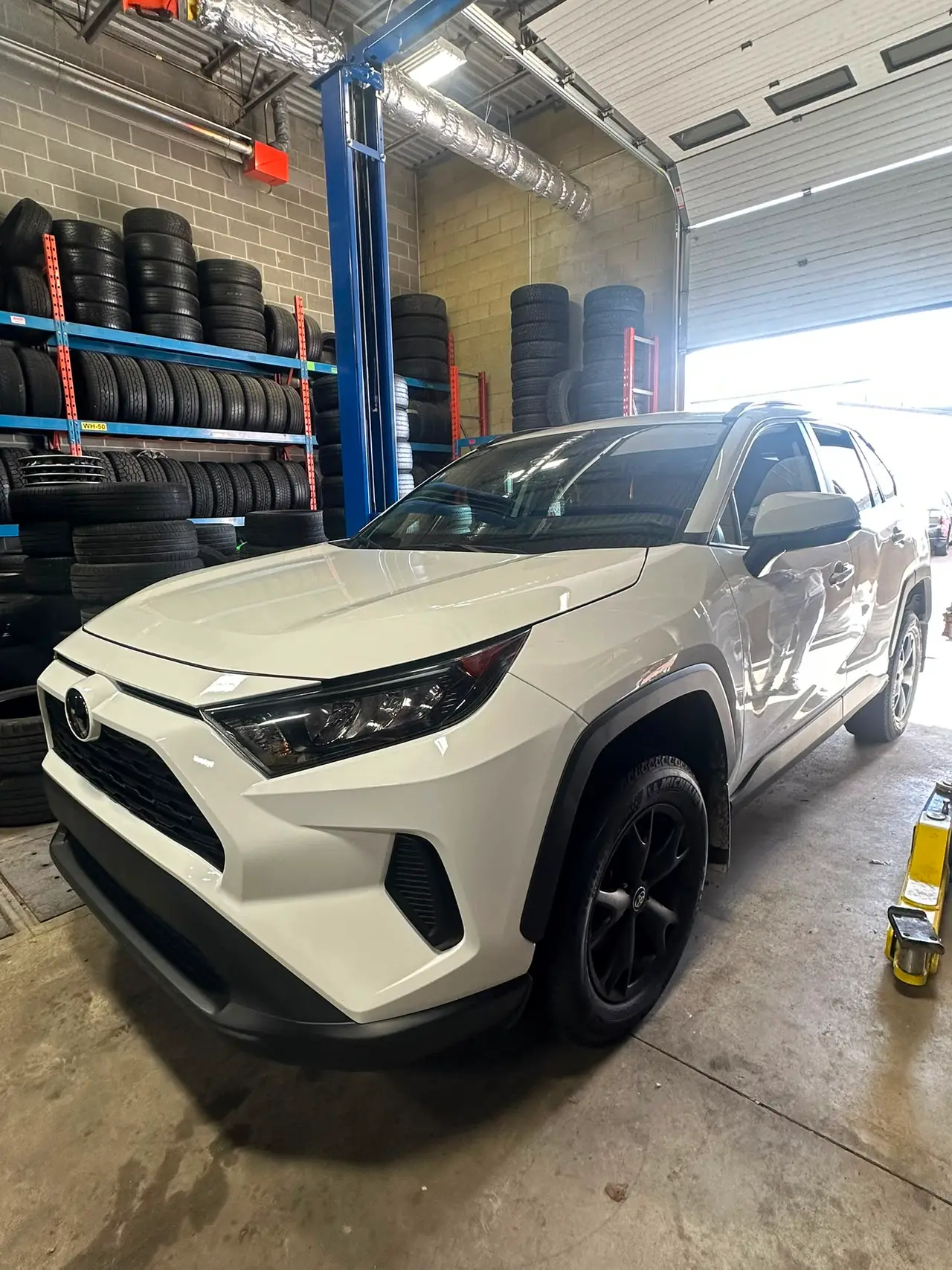
Knowing when to put winter tires on in Calgary is trickier than in most Canadian cities. We can get a September snowfall, a sunny 20°C week in October and a -25°C cold snap before Halloween. After more than 15 years of fall changeovers at our NE Calgary shop, here is the timing advice we give customers at the counter: watch the temperature, not the calendar, and book before the first forecast snow rather than after it.
The short answer: when to put winter tires on in Calgary
For most Calgary drivers, the sweet spot is late September to mid-October. That is when daytime highs start settling around 7°C and overnight lows regularly dip below freezing. If you commute early in the morning, drive the Deerfoot or Stoney Trail before sunrise, or head out to the mountains on weekends, lean toward the earlier end of that window.
There is no fixed date that works every year. Some falls stay mild into November, and others bring a proper snowfall in the first week of September. The best approach is to have your plan ready in August, then book as soon as the long-range forecast starts showing consistent cold mornings.
Why the 7°C rule matters
The 7°C rule comes from how tire rubber behaves in the cold. All-season and summer tires use compounds that are designed to stay firm and wear slowly in warm weather. Below about 7°C, those compounds start to stiffen. A stiff tire cannot conform to the tiny irregularities in the road surface, so grip drops, even on dry pavement.
Winter tires use a softer compound that stays flexible well below freezing, along with deeper tread and thousands of small slits called sipes that bite into snow and ice. On a cold, dry morning, a winter tire will often stop shorter than an all-season. On packed snow or black ice, the difference can be several car lengths.
When does it usually snow first in Calgary?
Calgary is known for early snow. Measurable snowfall in September is common enough that nobody here is truly surprised by it, and October almost always brings at least one real snow day. Because we sit close to the foothills at over 1,000 metres of elevation, cold air can arrive fast, and a Chinook can melt it all away just as fast.
That back-and-forth is exactly why waiting for the first snow is a mistake. The first snowy morning is when every tire shop in the city gets flooded with calls. Wait times stretch, popular sizes sell out and you end up driving on hardened all-seasons for another week or two while you wait for a spot.
How the Chinook confuses changeover timing
A Chinook can take the temperature from -15°C to +12°C in an afternoon. Drivers see a warm week in November and wonder whether they switched too early. The answer is almost always no. Winter tires do wear a bit faster on warm, dry pavement, but a few mild days will not hurt them in any meaningful way.
What does matter is that the next cold front often arrives with little warning. Having winters on for a warm week is a small cost; having all-seasons on during a surprise freeze is a real risk. Freeze-thaw cycles also create black ice on bridges, overpasses and shaded corners, which is where winter tires earn their keep.
How to beat the fall changeover rush
Every year, the busiest days at our shop follow the first forecast snowfall. If you want to skip the line, here is what works.
- Call in September to confirm your winter tires are still in good shape and your size is available if you need new ones.
- Book your tire change in Calgary for a weekday morning in late September or early October.
- Get your winters mounted on a second set of rims so future swaps are faster.
- Check tread depth before booking. If your winters are near the end of their life, you will want time to shop.
Are your old winter tires still good?
Before you swap, pull your winters out of storage and look closely. Winter tires need more tread than all-seasons to work properly. Most tire techs recommend replacing them once they are down to about 5/32 of an inch, because the tread can no longer pack snow and push slush away. Many winter tires have a secondary wear indicator molded into the tread for exactly this reason.
Age matters too. Rubber hardens over time even when a tire sits in a garage, and a hard winter tire loses much of its advantage. Check the DOT code on the sidewall; the last four digits show the week and year it was made. If your tires are getting old, cracked or hard, it may be time for new winter tires, or a good set of inspected used tires if you are on a budget.
On-rim vs off-rim: which changeover do you need?
If your winter tires are already mounted on their own wheels, you need an on-rim swap. We take off one set of assemblies, bolt on the other, torque the lug nuts and set pressures. It is the quicker option and the easiest on the tires.
If you only have one set of rims, you need an off-rim changeover. We dismount your all-seasons, mount the winters on the same wheels and balance each one. It takes longer, and repeated mounting twice a year adds wear on the beads. A second set of wheels, new or from our used rims in Calgary stock, usually pays for itself in time saved over a few seasons.
When to take winter tires off in spring
The same 7°C rule works in reverse. Once daytime highs stay consistently above 7°C and overnight lows are above freezing, your winter tires are wearing faster than they need to. In Calgary, that often means late April or May. We have seen snow on the May long weekend more than once, so many drivers wait until mid-May to be safe.
Do not leave winters on all summer. The soft compound wears quickly on hot pavement, and winter tires do not brake or corner as well as all-seasons in the heat. Swapping on time means your winter set lasts more seasons.
What about all-weather tires?
If changing tires twice a year sounds like a hassle, all-weather tires carrying the three-peak mountain snowflake symbol are a middle ground. They stay on year-round and handle cold and snow much better than all-seasons. They still do not match a dedicated winter tire on ice. Read our comparison of all-weather vs winter tires in Calgary to see which fits your driving.
Ready for Your Winter Changeover?
Beat the first-snow rush. Call us to book your seasonal tire change in NE Calgary.
FAQ
What is the best month to put winter tires on in Calgary?
For most drivers, late September to mid-October is the best window. Daytime highs start sitting around 7°C and overnight lows drop below freezing. Calgary often sees snow in September or early October, so booking before the first forecast snowfall avoids the busiest days at tire shops and makes sure you are ready when it arrives.
Is it bad to put winter tires on too early?
Not really. Winter tires wear a little faster on warm, dry pavement, but a week or two of mild weather after your changeover will not noticeably shorten their life. In Calgary, a warm Chinook can be followed by a sudden freeze, so being a bit early is much safer than being a bit late.
What is the 7°C rule for winter tires?
The 7°C rule says that once temperatures regularly fall below about 7°C, all-season tires begin to stiffen and lose grip, while winter tire compounds stay flexible. It is a practical guideline for timing your changeover. In Calgary, consider the morning lows as well as the daytime highs, since most commutes start in the cold.
When should I take my winter tires off in Calgary?
Switch back once daytime highs stay above 7°C and overnight lows are above freezing, which usually means late April or May in Calgary. Because late spring snow is common, many drivers wait until mid-May. Leaving winter tires on through summer wears the soft compound quickly and reduces handling in hot weather.
How much tread do winter tires need to be safe?
Winter tires work best with deep tread. Most tire techs recommend replacing them at around 5/32 of an inch, even though the legal wear bars sit lower. Below that depth, the tread cannot grip packed snow or clear slush effectively. Many winter tires have a built-in indicator showing when they are no longer effective for winter use.