
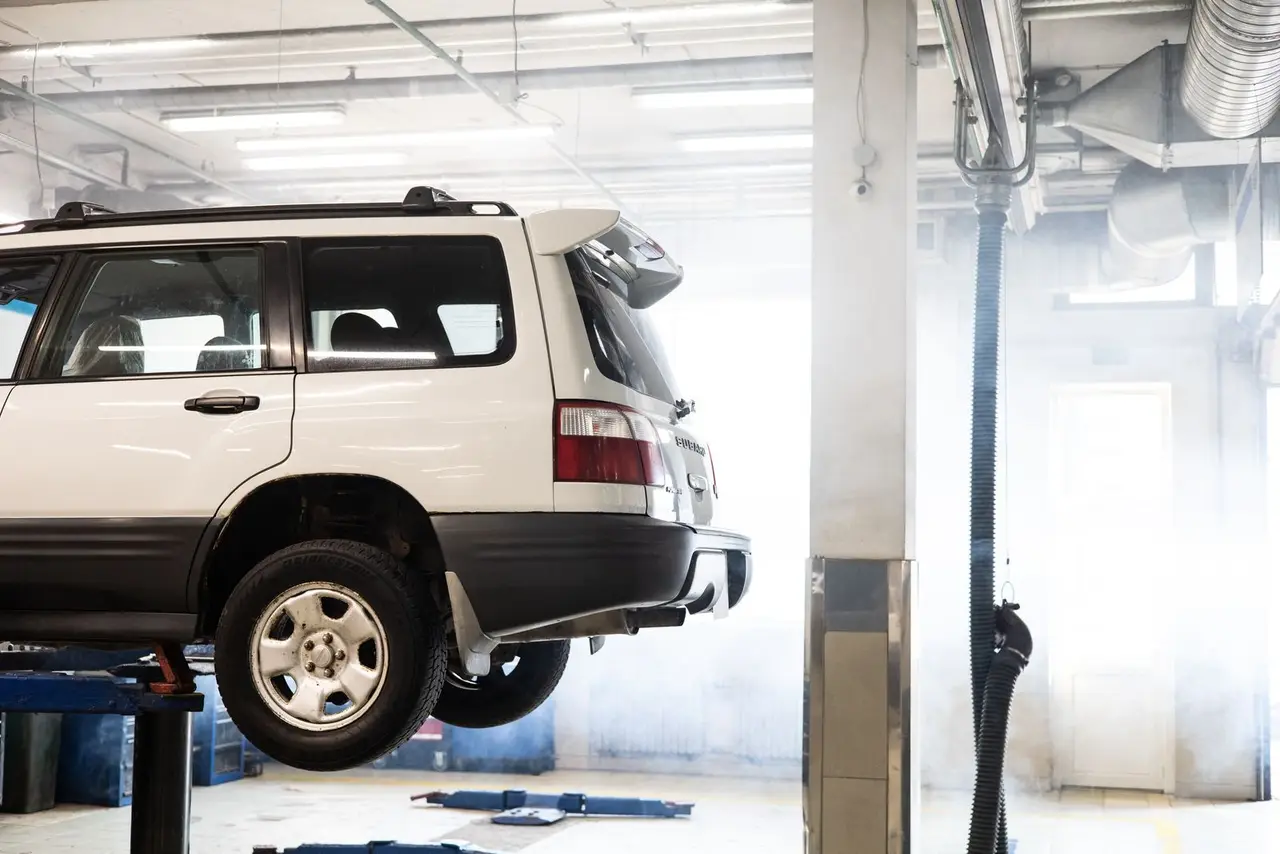
Tire Rotation in Calgary
- Right Pattern for Your Drivetrain
- Tread Depth Measured
- Open Mon–Sat
Even out the wear and get more kilometres from the tires you already own
Shah Tires Offers Tire Rotation in Calgary to Stretch Every Set
Your front and rear tires do different jobs, so they wear at different rates. Tire rotation in Calgary moves each tire to a new position on a schedule, so all four reach the end of their life together instead of two wearing out early. At our shop at 227 41 Ave NE, every rotation comes with a tread depth reading at each corner, a look at the wear pattern, pressures set to your placard and lug nuts torqued to spec. It is one of the cheapest ways to get more kilometres out of a set.
On a front-wheel-drive Corolla, Sentra or Sienna, the fronts steer, carry the engine and put down all the power. They can wear two or three times faster than the rears. Leave them where they are and you buy front tires twice as often, while the rears age out with tread left on them.
How to Book a Rotation
Call (587) 894-3516 or drive in Monday to Saturday, 9 AM to 6 PM. A rotation is a short job, so it slots in easily between bigger ones. The simplest way to never forget is to ask us to rotate the set whenever it goes on at your seasonal tire change, or while the car is in for an oil change.
If your car shows individual tire pressures on the dash, mention it when you book. Some of those systems need a sensor relearn after the wheels move, and we will build that into the visit.
When Your Tires Are Due for a Rotation
Most vehicle makers suggest rotating tires every 8,000 to 10,000 km, and your owner's manual has the exact number. Heavy EVs, performance cars on soft rubber and trucks that tow may need it sooner. In Calgary, rotating at each spring and fall changeover lines up well with that interval for most drivers.
Signs Your Tires Need Rotating
- Front and rear tread depths differ by 2/32 of an inch or more: the gap only grows from here.
- It has been more than 10,000 km since the last rotation: or you simply cannot remember.
- The car feels a little vague in the snow: worn fronts lose steering bite before the rears do.
- One pair of tires looks visibly shallower: usually the drive axle.
- Road noise has crept up: uneven wear hums and drones at highway speed.
- You are about to go on a long drive: a Banff or Okanagan trip is a good time to even things out.
Need a Tire Rotation in Calgary?
Monday to Saturday, 9 AM to 6 PM. Closed Sunday.
Mon–Sat: 9:00 AM – 6:00 PM · Sun: Closed
We rotate tires on cars, SUVs, EVs and light trucks at 227 41 Ave NE, a short drive from McKnight Blvd, 32 Ave NE and Deerfoot Trail.
How We Rotate Tires
A rotation is more than moving wheels around. It is the one time every few months that someone looks closely at all four tires with the wheels off.
- Measure tread depthWe read each tire in several spots across the tread to see how it is wearing and choose the right pattern.
- Read the wearEdge wear, centre wear, cupping and feathering all point to something, and we tell you what.
- Inspect for damageNails, sidewall cuts, bulges and age cracks are much easier to spot with the wheel in hand.
- Move the wheelsEach wheel goes to its new spot based on your drivetrain and tire type.
- Set pressuresTires are inflated to the placard numbers, which are sometimes different front and rear.
- Torque and TPMSLug nuts are torqued in a star pattern, and we confirm the pressure light is off or run a relearn.
How Often to Rotate Tires in Calgary
Every 8,000 to 10,000 km is the usual guideline, or at every seasonal changeover if your winter and summer sets are on their own rims. Mark each tire's position when it comes off, and we will move it to a new corner when it goes back on. Drivers who put on big kilometres, like airport shuttle or delivery drivers in the northeast, may want to rotate between changeovers as well.
Rotating Tires at Home vs in Our Bay
You can rotate tires in your driveway with a floor jack and stands, but you need to lift two or four corners at once, know the right pattern, and torque the nuts properly afterward. What a home rotation usually misses is the inspection: a measured tread depth, a nail on the inside edge, a TPMS relearn, or a wear pattern that says the alignment is off. That inspection is where most of the value of a professional rotation comes from.
How Long Does a Tire Rotation Take?
A straightforward rotation on a car or SUV takes around 20 to 30 minutes in the bay. It takes a little longer if a wheel needs rebalancing, a sensor needs a relearn, or a lug nut has seized after a salty winter.
How Much Does Tire Rotation Cost in Calgary?
A simple rotation on a car with matching tires sits at the lower end. Heavier trucks, large wheels, vehicles that need a TPMS relearn afterward, and rotations that involve dismounting tires (such as directional tires crossing sides) take longer. Prices exclude GST, and we accept cash, debit, e-Transfer and credit cards.
| Tire rotation pricing | Price |
|---|---|
| Rotation: set of 4 | Call for today's price |
| Rotation + balance (set of 4) | Call for today's price |
Prices in CAD, before GST. Tire size, rim size and vehicle affect the final price.
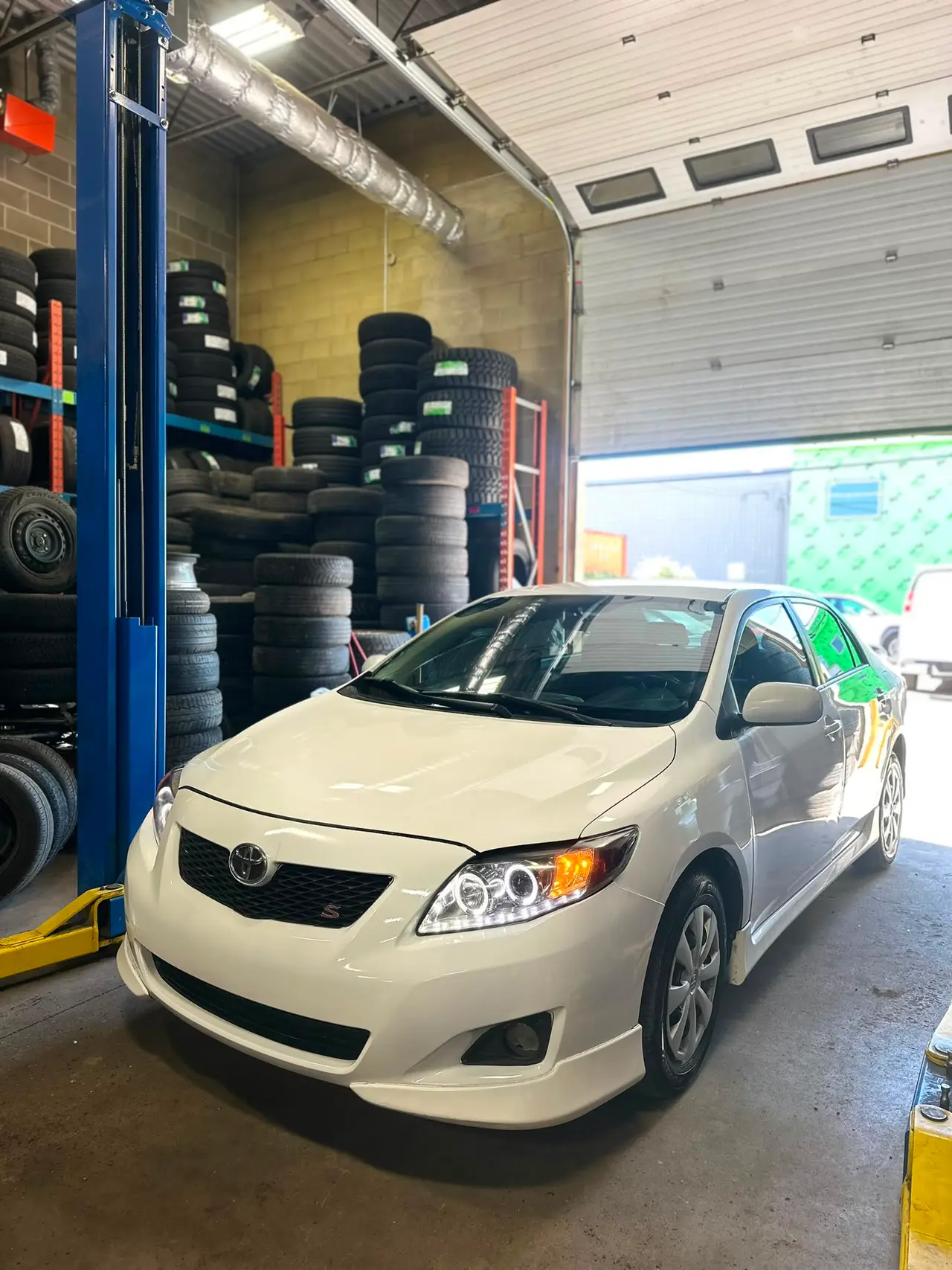
See Our Other Services
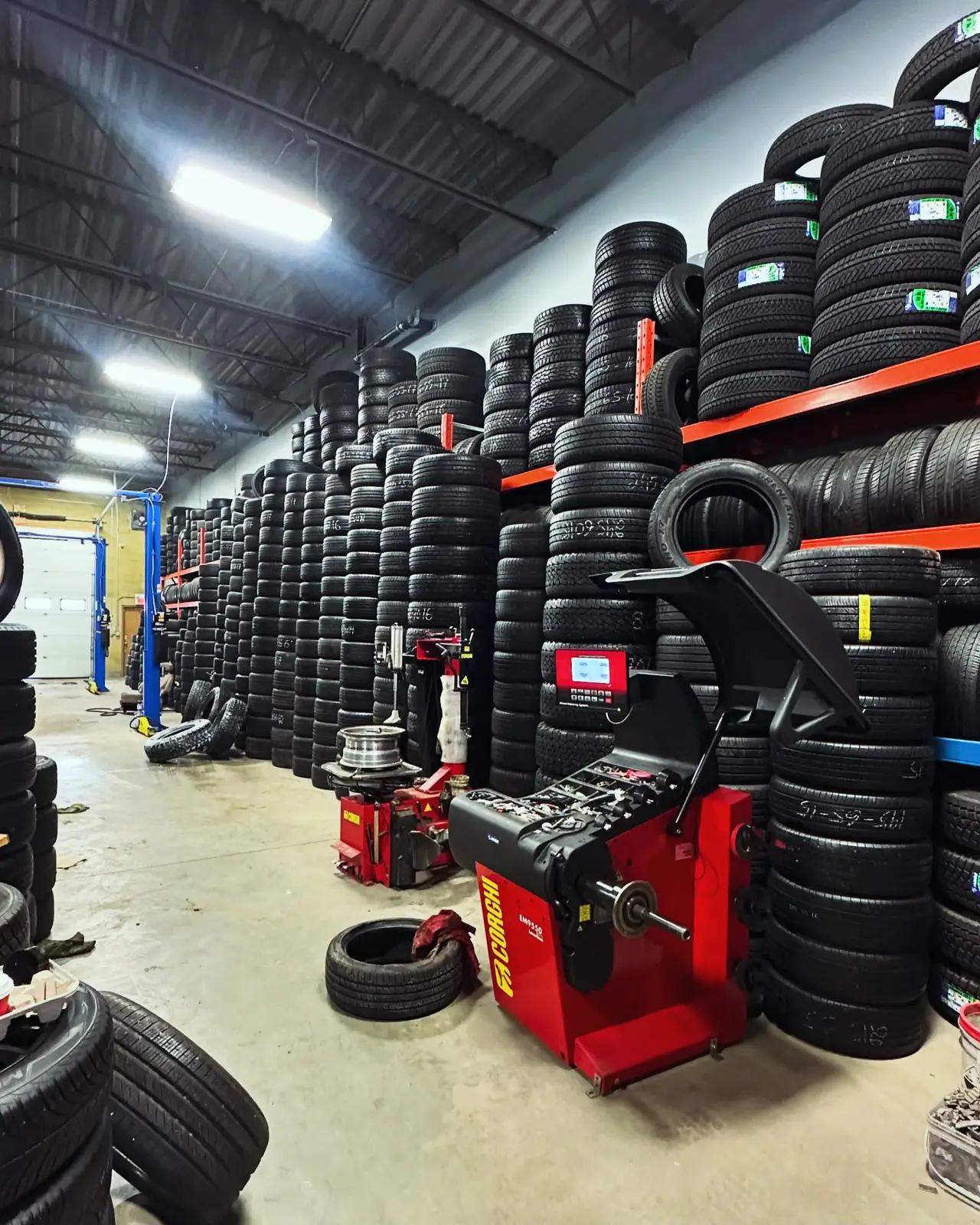
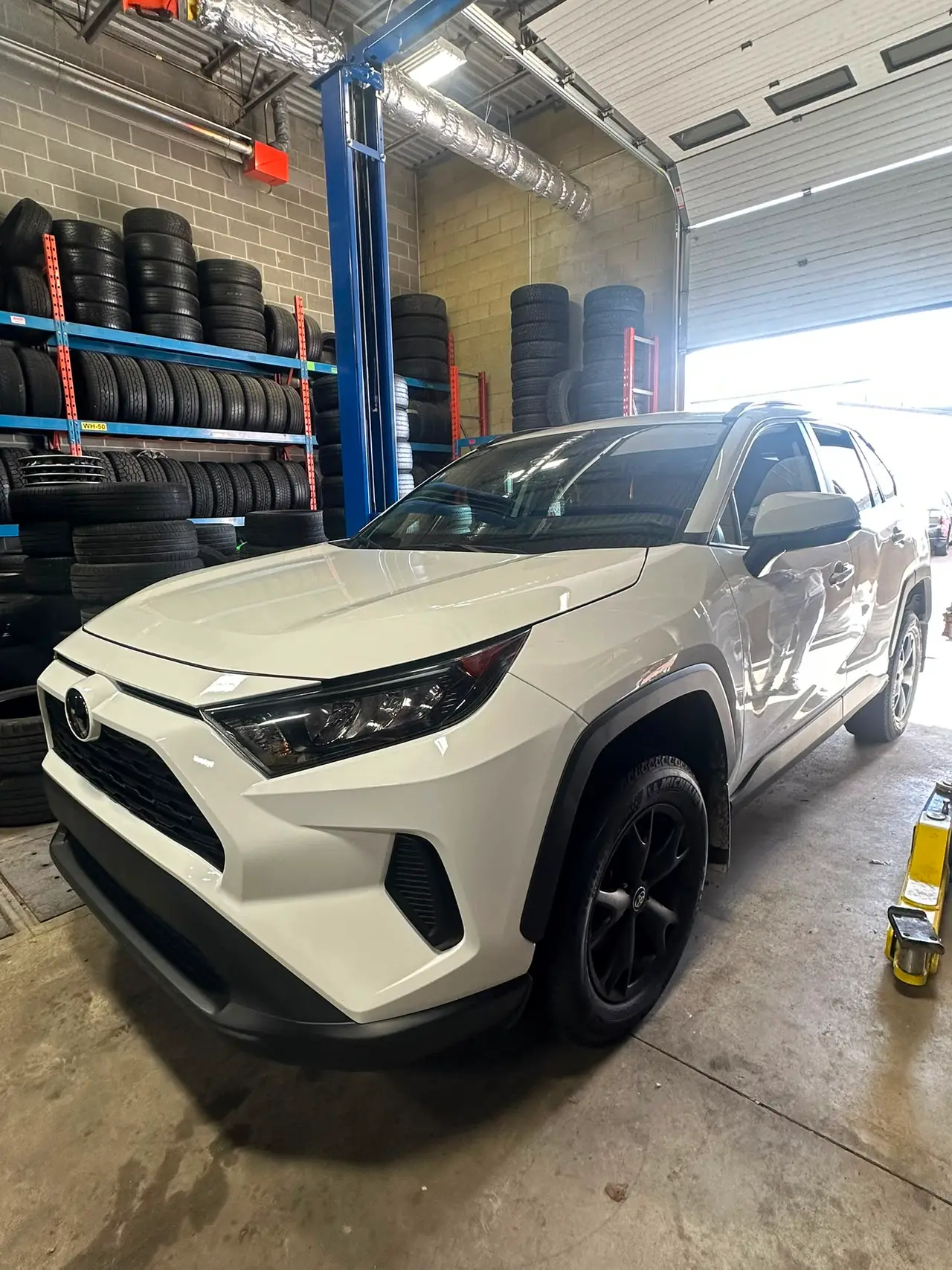
What Our Tire Rotation Includes
Each rotation at Shah Tires covers:
- Tread depth measured on all four tires, in several spots
- Wear pattern read and explained
- Inspection for nails, cuts, bulges and age cracks
- Wheels moved to the correct positions for your drivetrain
- Pressures set to your door placard, front and rear
- Lug nuts torqued to spec in a star pattern
- TPMS light checked, with a relearn where your vehicle needs it
A Rotation That Actually Checks Your Tires
Moving wheels is the easy part. Every rotation at our NE Calgary shop also includes:
Tread depth readings
Wear pattern check
Damage inspection
Correct rotation pattern
Placard pressures
Torque & TPMS check
Found Pothole Damage During Your Rotation?
With the wheels off, winter's damage is easy to see: a bent inner rim lip from a frozen rut, a bulge from a Deerfoot pothole, a clean spot where a balance weight used to be. We do not sell a road hazard plan, but we will point out what we find, check the balance and tell you honestly whether the tire is safe. Sometimes the fix is a tire repair; sometimes it is a replacement.
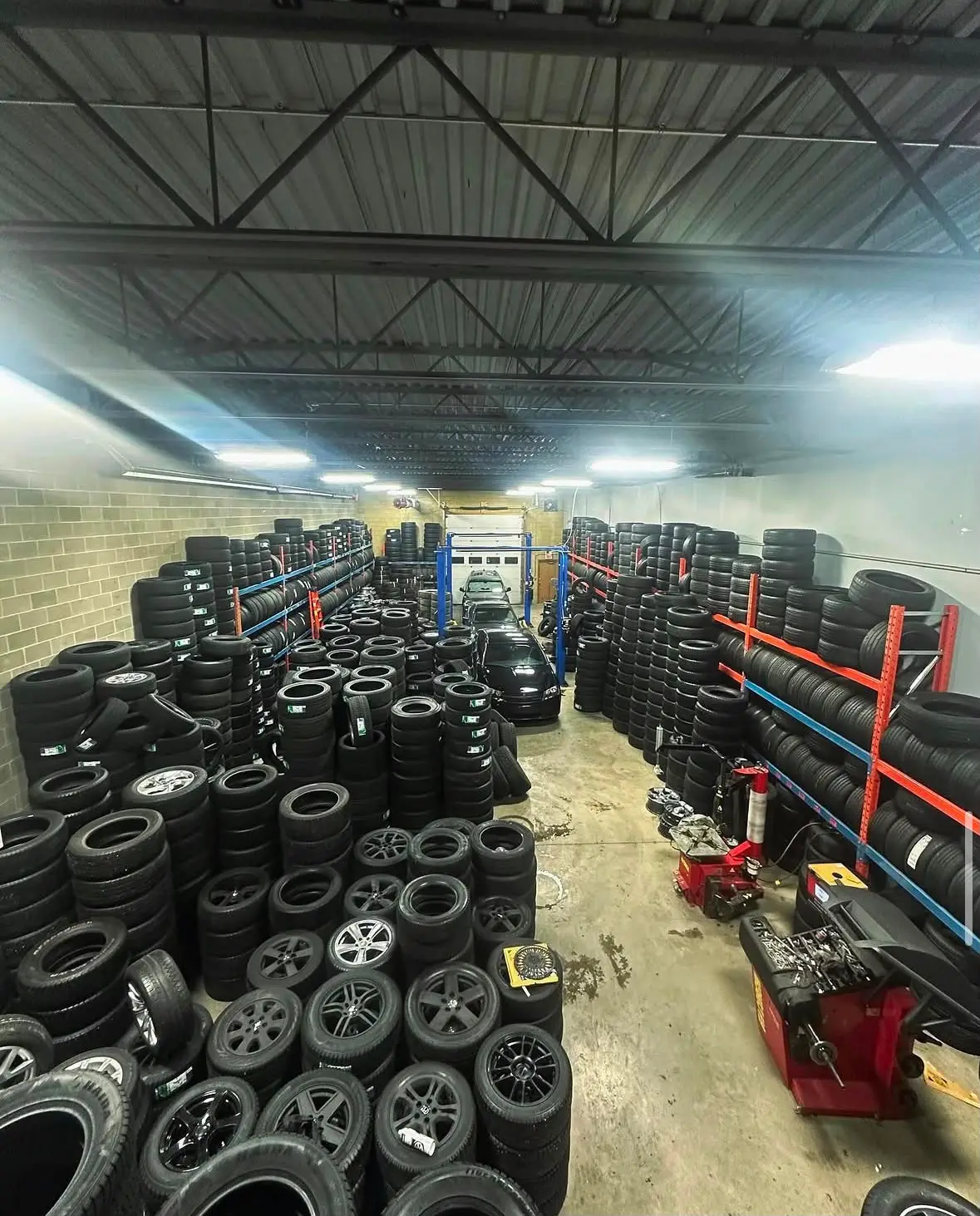
Need to Upgrade Your Tires?
If the rotation shows your set is near the end, we can help you choose the next one.

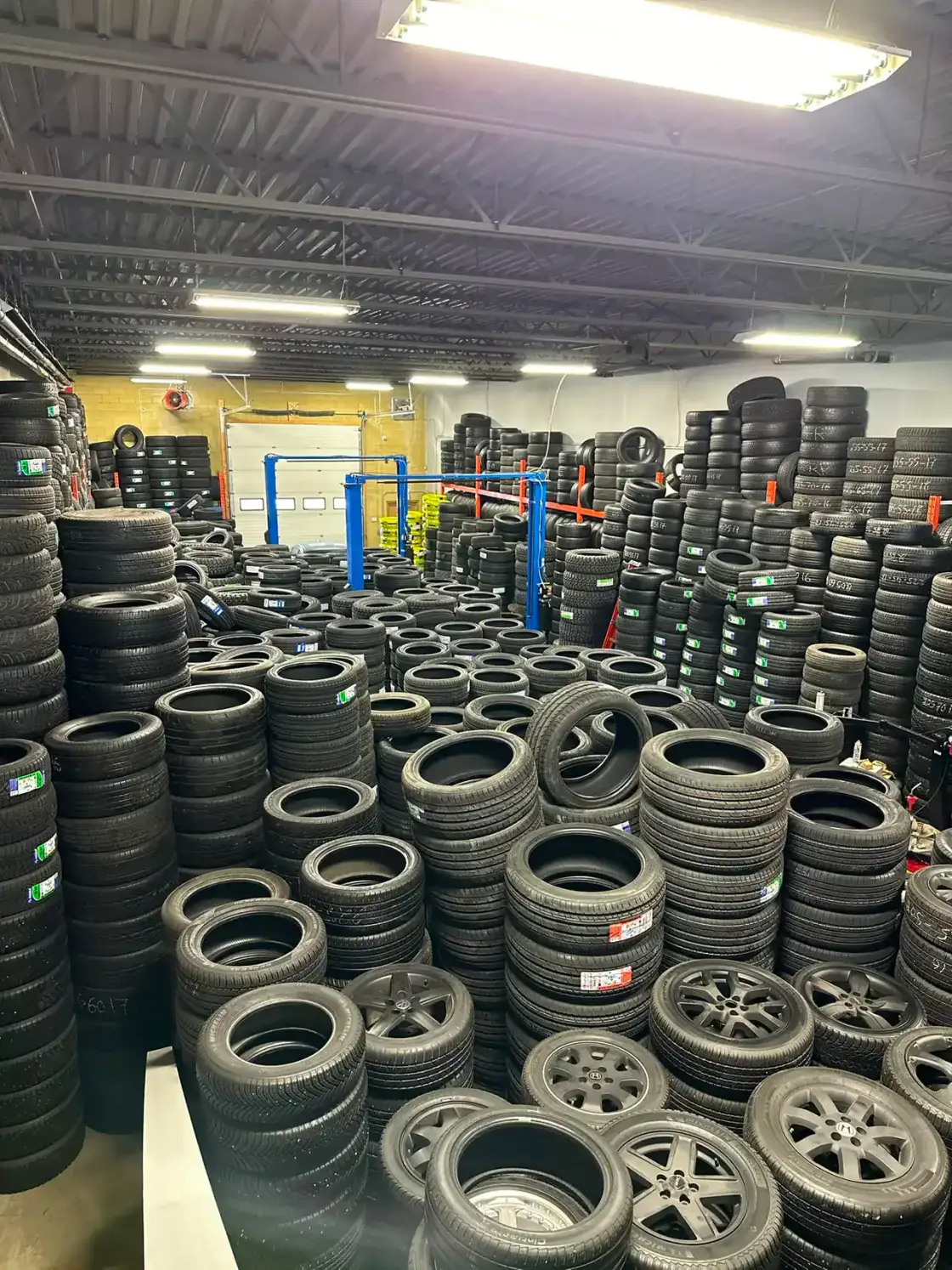
Tire Troubleshooting
Repair & Maintenance
Nails and slow leaks found during a rotation are repaired from the inside before the wheel goes back on.
Installation
Worn-out tires are replaced and mounted in the same visit, with balancing and torque included.
Inspection
Every rotation starts with measured tread depth and a look at the wear pattern on all four corners.
Why Tire Rotation Is Important
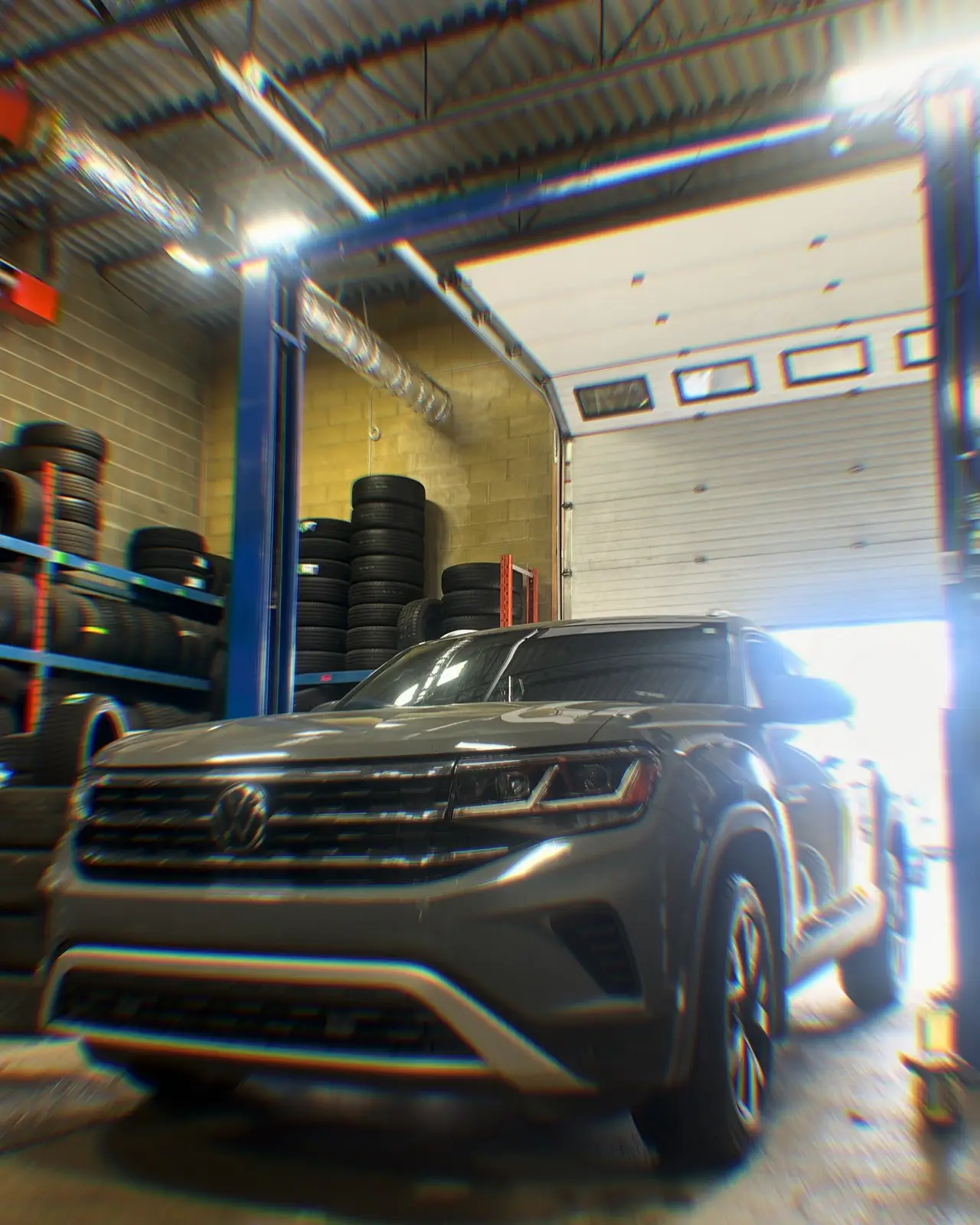
Even wear keeps the car's handling predictable, which you notice on the first icy morning of the year. It matters most on all-wheel-drive vehicles like the RAV4, CR-V and VW Atlas, where a big difference in tread depth between tires makes them slightly different diameters and forces the drivetrain to make up the difference. Regular rotation also lets you replace all four tires at once, on your schedule, instead of buying a mismatched pair in a hurry.
Calgary Driving Challenges for Your Tread
Our roads wear tires in their own way. Gravel spread all winter scrubs the tread, frozen ruts and potholes knock wheels around, and cold mornings drop pressures so tires run soft on their shoulders. Long, straight highway runs on Deerfoot and Stoney Trail wear tires differently from stop-and-go trips through Mayland Heights or Beddington. Rotating on schedule spreads all of that across four tires instead of two.
Tire Rotation Patterns
There is no single pattern for every vehicle. The right move depends on what drives the wheels and what kind of tires you run.
| Vehicle type | Common pattern | Notes |
|---|---|---|
| Front-wheel drive | Forward cross | Fronts move straight back; rears cross to the opposite front |
| Rear-wheel drive and 4x4 | Rearward cross | Rears move straight forward; fronts cross to the opposite rear |
| All-wheel drive | X-pattern | All four cross diagonally, or follow the owner's manual |
| Directional tires | Front to back, same side | The arrow on the sidewall must keep pointing forward |
| Staggered sizes | Side to side only, if allowed | Different front and rear sizes cannot swap axles |
| Full-size matching spare | Five-tire rotation | Common on trucks; the spare joins the rotation |
Rotating Tires on Trucks, EVs and AWD SUVs
Pickups like the Ram 1500 and Ford F-350 carry most of their weight up front when empty, so the front tires wear their shoulders while the rears wear from the drive torque. Many have a full-size matching spare, which can join a five-tire rotation and add real life to an expensive set of truck tires. Heavy EVs such as a Tesla put instant torque through the tires and are known for fast tread wear, so a shorter rotation interval pays off. On AWD SUVs like the RAV4 or Atlas, keeping all four tires within a couple of 32nds of each other is the goal, and rotation is how you get there.
Vehicles that show each tire's pressure on the dash usually need a sensor relearn once the wheels move, or the display shows the wrong corner. We handle that during the visit; our TPMS sensor page explains how the system works.
What Your Tread Wear Is Telling You
- Worn in the centre: usually too much air, common in fall when people top up on a cold morning and forget to adjust.
- Worn on both edges: usually too little air, very common in Calgary winters as pressures drop with the temperature.
- Worn on one edge only: often an alignment angle issue; have the alignment checked.
- Cupped or scalloped spots: often a balance problem or worn suspension parts; see our tire balancing page.
- Flat spots: usually a hard brake lock-up on ice, or a car that sat for a long time.
Rotation slows uneven wear, but it cannot fix the cause. If a pattern points to a problem, we show you so you can deal with it. Our article on how long tires last in Calgary covers what else shortens tread life.
Why Calgary Drivers Choose Shah Tires for Tire Rotation
A rotation done by someone who actually reads the tires is worth more than one done on autopilot. With over 15 years of tire experience, we will tell you when a set is wearing evenly, when it is not, and roughly how much life is left. That plain talk has earned us a 4.8★ Google rating from 232+ reviews.
We are handy for drivers from Huntington Hills, Tuxedo Park, Thorncliffe, Vista Heights and the airport industrial area, and we take cash, debit, e-Transfer and credit cards.
When Your Set Is Done, We Can Help
If your rotation shows it is time for new tires, financing and payment plans are available, subject to approval. Ask us for current options.
Frequently Asked Questions
How often should I rotate my tires?
Most vehicles should have their tires rotated every 8,000 to 10,000 km, but your owner's manual has the exact interval. In Calgary, an easy habit is to rotate at each spring and fall changeover, since most drivers put about that distance on a set in a season. Heavy EVs, performance cars and trucks that tow may need rotations sooner.
Does tire rotation really make tires last longer?
Yes. Without rotation, the tires on the drive and steering axle wear much faster than the others. Moving them around keeps tread even across all four, so you replace the whole set once rather than buying a pair early. Even tread also keeps handling and braking predictable on Calgary's icy roads.
Do I need to rotate winter tires?
Yes. Winter tires wear unevenly like any other tire, and uneven winter tread means less grip on snow and ice. The easiest approach is to rotate them each fall as they go back on. Mark each tire's position when it comes off in spring so we know where to move it next season.
Can all-wheel-drive vehicles skip rotations?
No, they need them more. Many AWD systems are sensitive to differences in tire diameter, and uneven tread makes the tires slightly different sizes. Over time that can strain the drivetrain. Regular rotation keeps all four tires closely matched, which protects both the tires and the vehicle.
Will my tire pressure light come on after a rotation?
On most vehicles, no. But some cars show pressure for each wheel position and need a TPMS relearn after a rotation to display the right tire in the right spot. If yours is one of them, we run the relearn as part of the job. The light can also come on if pressures drop in cold weather.
Can uneven tire wear be fixed by rotating?
Rotation slows uneven wear, but it does not fix the cause. Wear on one edge often points to an alignment problem, and cupping can mean a balance or suspension issue. We point out any pattern we see during the rotation so you can deal with the root cause instead of wearing out the next set the same way.
Can you rotate staggered or directional tires?
Partly. Staggered setups, with wider tires at the back, cannot move between axles; if the tires are not directional they can sometimes swap side to side. Directional tires, with a V-shaped tread and an arrow on the sidewall, can only move front to back on the same side. We will explain what your setup allows.
How long does a tire rotation take at Shah Tires?
A typical rotation takes about 20 to 30 minutes once your vehicle is in the bay. It can take longer if a wheel needs rebalancing, a TPMS relearn is required or a lug nut has seized. Call (587) 894-3516 before you come to check how busy we are that day.