
How Long Do Tires Last in Calgary?
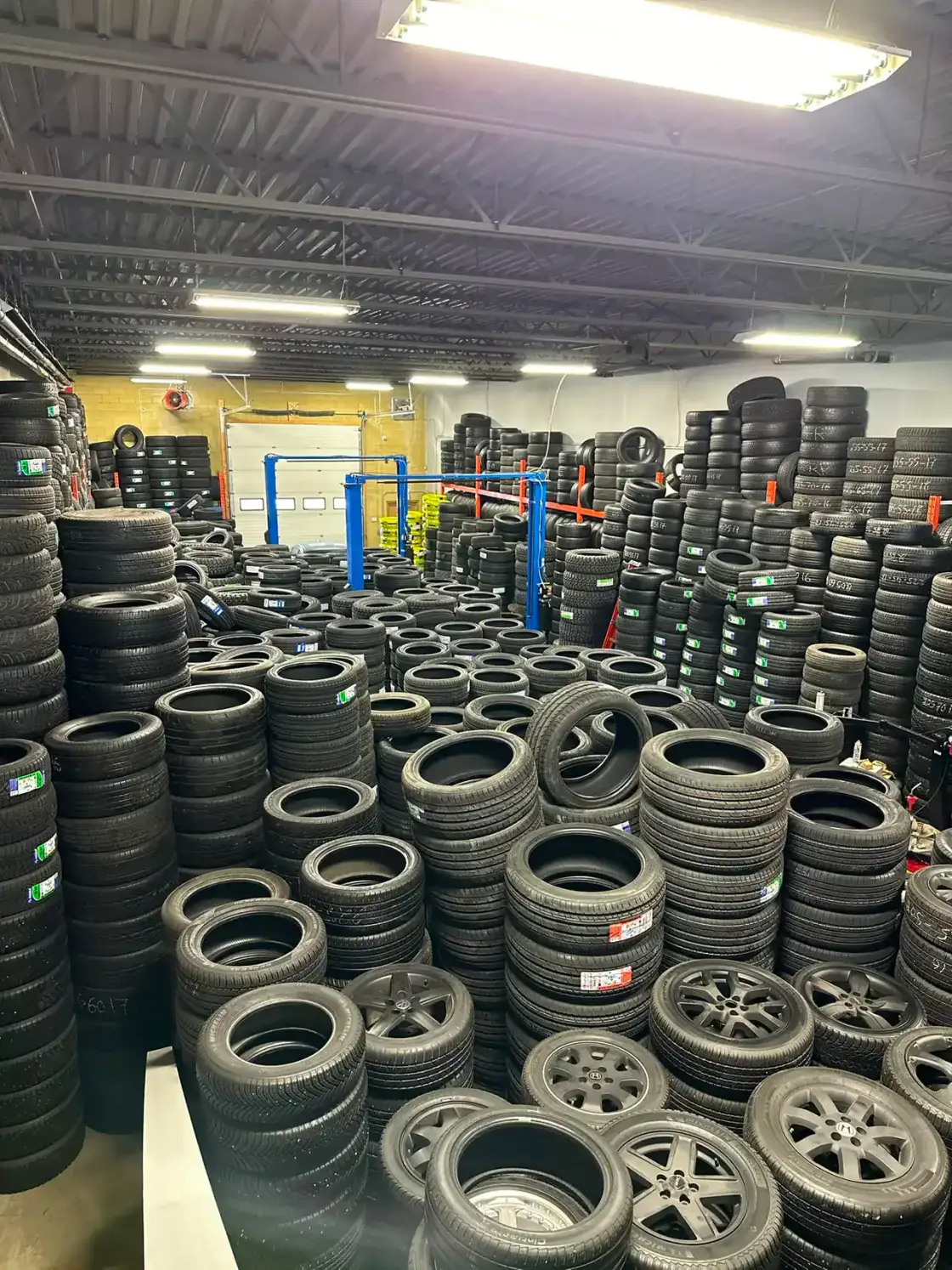
How long do tires last in Calgary? The honest answer is that it depends on three things: tread depth, tire age and how you drive. Our roads are hard on rubber, with potholes, gravel, curbs buried under snow and wild Chinook temperature swings. After more than 15 years of pulling worn tires off cars in our NE Calgary bays, here is what we actually see, and how to get the most life out of every set.
How long do tires last in Calgary on average?
As a rough guide, many all-season tires are rated by their makers for somewhere around 60,000 to 100,000 km, and performance tires usually less. Winter tires do not usually carry the same kind of rating, but in Calgary a good set used only in the cold months often lasts around four to six seasons.
Those are starting points, not promises. We regularly see all-seasons finished at 40,000 km because of a bad alignment, and winter tires still going strong in their sixth season because the owner kept up with pressure and rotations.
| Tire type | What we typically see in Calgary | Main wear factor |
|---|---|---|
| All-season | Often 4 to 6 years of year-round use | Alignment and rotation |
| All-weather | Usually less than all-season when used year-round | Hot summer pavement |
| Winter | Around 4 to 6 winters | Tread depth for snow grip |
| LT all-terrain | Varies widely with load and use | Towing, gravel roads, pressure |
Tread depth: the first thing we check
Tread depth is measured in 32nds of an inch or in millimetres. New passenger tires usually start around 10/32 to 12/32. Every tire has small raised wear bars in the grooves at 2/32 (about 1.6 mm). When the tread is level with those bars, the tire is done, full stop.
For Calgary winters, though, 2/32 is far too late. Snow grip depends on deep grooves and sipes, and most tire professionals consider a winter tire past its best for snow at around 4/32 to 5/32. All-season tires also lose a lot of wet and slush grip well before the wear bars.
Tire age: why a tire can look good and still be old
Rubber ages even when a tire is not being driven. The oils in the compound slowly dry out, the tire hardens and grip drops, especially in the cold. Our dry climate and strong prairie sun speed that along.
Find the DOT code on the sidewall. The last four digits are the week and year it was made, so 2319 means the 23rd week of 2019. Many manufacturers suggest having tires inspected every year once they are five years old and replacing them at ten years regardless of tread. If you see small cracks in the sidewall or between tread blocks, have them checked sooner.
What wears tires out faster in Calgary
What we see most often is inside-edge wear on the front tires. From the outside, the tire looks fine. Turn the wheel and the inner shoulder is down to the cords. That is almost always an alignment problem, and it catches people out because they never see it.
- Potholes and curbs: spring pothole season on Deerfoot, Memorial and side streets bends rims and knocks alignment out, which leads to uneven wear.
- Low pressure: tires lose roughly 1 psi for every 5 to 6°C drop, and a Chinook followed by a cold snap can leave them badly underinflated.
- Running winters in summer: soft winter compounds wear quickly on hot July pavement.
- Gravel and construction debris: cuts and chips in the tread, plus the odd nail or screw.
- Highway trips: long runs to Banff or Edmonton at highway speed add up fast.
- Aggressive driving: hard launches and cornering scrub off tread.
How to make your tires last longer
- Check pressure monthlyUse a gauge on cold tires and set them to the door-jamb sticker, not the number on the sidewall.
- Rotate regularlyA tire rotation every 8,000 to 10,000 km, or at each seasonal changeover, evens out wear front to back.
- Get aligned after hard hitsIf you hit a big pothole or the car pulls, book a wheel alignment before the tires wear unevenly.
- Swap seasons on timeTake winters off once the lows stay above freezing in spring so they last more seasons.
- Store them properlyKeep off-season tires clean, cool, dry and out of the sun.
When to replace your tires
Replace your tires when the tread reaches the wear bars, when winter tires are down to about 4/32 to 5/32, when they are around ten years old or when there is damage that cannot be safely repaired, such as a sidewall bulge or cut. Replace them sooner if they vibrate, thump or lose air repeatedly.
Ideally, replace all four together, especially on all-wheel-drive vehicles, where mismatched tread depths can strain the drivetrain. When you are ready, browse new tires in Calgary or ask about inspected used tires if you need a matching tire or two on a budget. We are happy to measure your tread for you at 227 41 Ave NE; just stop by or call (587) 894-3516.
Time for New Tires? We Can Check Yours
Bring your vehicle to 227 41 Ave NE and we will measure tread depth, check the DOT age and tell you honestly how much life is left.
FAQ
How many years do tires last in Calgary?
Most all-season tires last around four to six years of year-round driving in Calgary, and winter tires used only in the cold months often last four to six seasons. Your actual result depends on kilometres driven, alignment, pressure and how much rough road you cover. No matter how much tread is left, have tires inspected yearly after five years.
How do I check my tire age?
Look for the DOT code on the sidewall. The last four digits show the week and year of manufacture. For example, 1422 means the 14th week of 2022. The full code is sometimes only on one side of the tire, so you may need to check the inner sidewall if you cannot find it on the outside.
What tread depth is too low for winter in Calgary?
For snow and slush, most tire professionals consider around 4/32 to 5/32 of an inch the practical limit for a winter tire. Below that, the grooves cannot clear snow and the tire behaves more like an all-season. Legally worn tires at 2/32 are far too shallow for a Calgary winter. We can measure your tread for you.
Do tires wear faster in cold weather?
Winter tires on cold roads wear at a normal rate. The faster wear usually comes from running winter tires into warm spring or summer weather, from low pressure after temperature drops, and from pothole damage and alignment problems during freeze-thaw season. Keeping pressures right through the Chinook swings makes a real difference to tire life.
Should I replace all four tires at once?
It is ideal, especially on all-wheel-drive vehicles where different tread depths can strain the drivetrain. If only one or two tires need replacing, match the brand, model and tread depth as closely as possible, and put the newer tires on the rear. Check your owner's manual for any AWD tread-matching guidance.
Why are my tires wearing on the inside edge?
Inside-edge wear is usually caused by alignment, most often too much negative camber or incorrect toe. Potholes, curbs and worn suspension parts can knock alignment out. The wear often goes unnoticed because the outside of the tire looks fine. An alignment check and a rotation can stop it from spreading to your new tires.