
Can You Drive With a Nail in Your Tire?
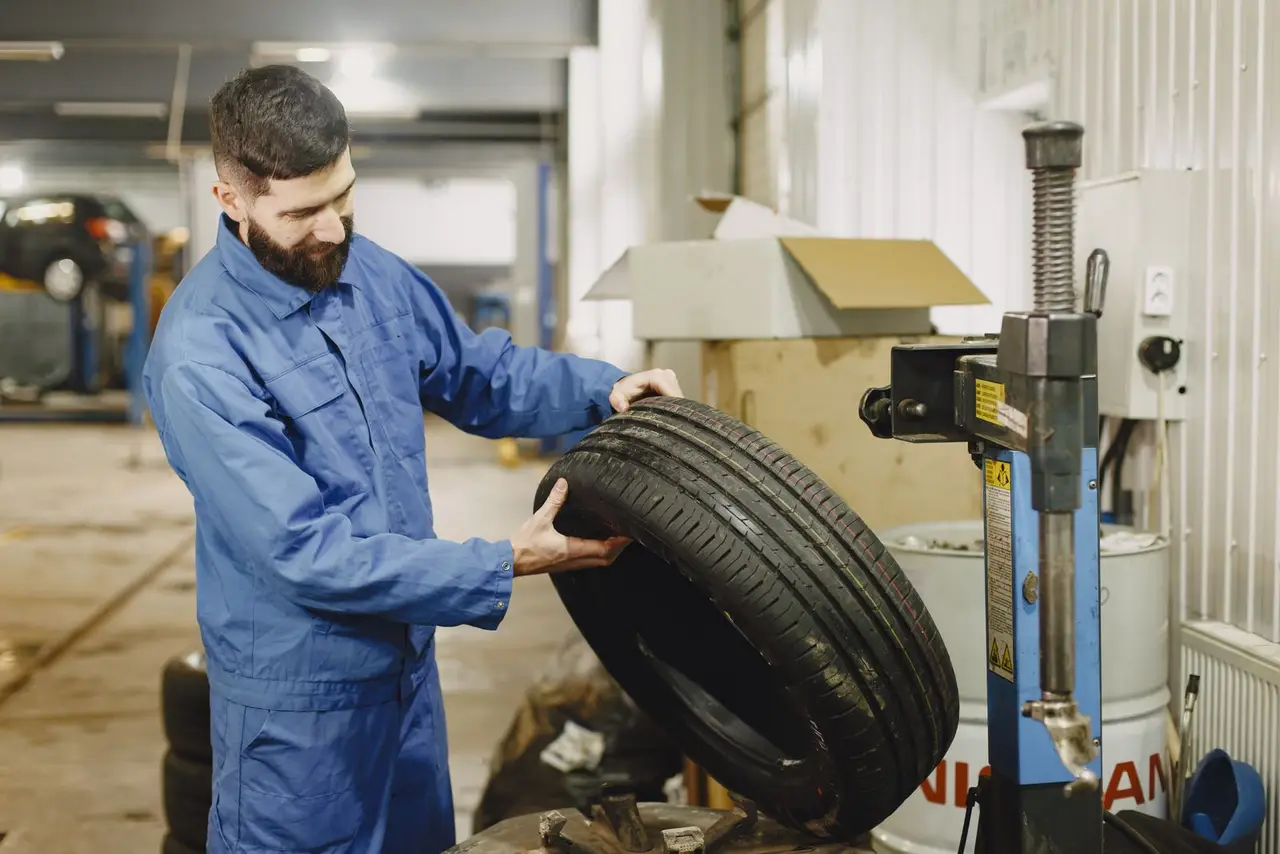
Can you drive with a nail in your tire? Usually for a short distance, yes, but only to get it looked at and only if the tire is holding air. We pull screws, roofing nails and the odd bit of rebar out of tires in our NE Calgary bay nearly every day, and it peaks in spring when construction debris and pothole season arrive together. Here is how we decide what is safe, what can be fixed and when a tire has to go.
The Quick Answer: Drive Carefully, but Not Far
If the tire looks normal, the pressure is close to spec and the nail is in the tread (the part that touches the road), you can usually drive gently to a tire shop. Keep the trip short, keep the speed down and use side streets instead of Deerfoot if you have the choice.
If the tire is visibly low, the pressure light is on and the reading keeps falling, or the nail is in the sidewall or right at the shoulder, stop driving. Put the spare on or call a tow. A few kilometres on a soft tire can crush the sidewall from the inside, and then no repair is possible.
Why a Nail Often Keeps the Air In
A nail or screw pushed into the tread is squeezed tightly by the rubber, so it seals reasonably well. That is why many drivers carry a screw around for weeks and only find it at the gas station, or when the tire pressure light comes on during the first cold snap.
The seal is never perfect, though. Water and road salt creep along the puncture into the steel belts. Over time that moisture causes rust and can separate the layers inside the tire. So even if it seems fine, a nail in tire should be dealt with soon, not at the next seasonal changeover.
How Far Can You Go With a Nail in Your Tire?
There is no safe number of kilometres, because it depends on where the nail sits, how big it is and how fast air is escaping. Our honest counter rule: drive it only as far as it takes to get it fixed. Check these things before you move the car:
- Measure the pressure with a gauge and compare it to the sticker in the driver's door jamb.
- Look at the location. Centre of the tread is good news; shoulder or sidewall is not.
- Spray soapy water around the nail. Steady bubbles mean an active leak.
- If it is low, add air and check again after ten minutes.
- If it will not hold air for ten minutes, it will not hold it for the drive. Use the spare.
Can a Tire With a Nail Be Repaired?
Often, yes. Widely accepted industry guidelines allow a passenger or light-truck tire to be repaired when certain conditions are met. Most screws and nails fall well inside them.
When a Repair Is Possible
- The puncture is in the tread area, away from the shoulder.
- The hole is no larger than about 6 mm (a quarter inch) across.
- The tire was not driven on while flat or badly underinflated.
- It does not overlap an earlier repair, and the tire has useful tread left.
When the Tire Must Be Replaced
- The damage is in the sidewall or shoulder, which flex constantly and cannot hold a repair.
- The hole is too big, or it is a cut rather than a puncture.
- The inner liner shows the rubbed or crumbled look of a tire run flat.
- The tread is already close to the wear bars, so a repair makes little sense.
In those cases we show you the damage and talk through new tires or a quality used tire in the same size, so it matches the other three.
Plug, Patch or Plug-Patch: Which Fix Is Right?
A roadside plug kit pushes a sticky string into the hole from the outside. It can get you home, but it does not seal the inner liner and nobody has checked inside, so we treat it as temporary. Our tire repair kit guide explains the options in more detail.
A patch on its own seals the inside but leaves the puncture channel open for water to travel along the belts. The proper answer is a one-piece plug-patch, which is how we handle tire repair in Calgary:
- Find and mark the punctureWe locate the leak and check the tread, shoulder and sidewall for other damage.
- Dismount and inspect insideThe tire comes off the rim so we can spot run-flat damage the outside hides.
- Prepare the injuryThe hole is cleaned out and the liner is buffed so the repair bonds properly.
- Install the plug-patchOne unit fills the puncture channel and seals the liner at the same time.
- Remount, balance and checkWe remount, balance, set the pressure and check the valve and sensor before you go.
Do Not Forget the Pressure Sensor
Most vehicles on Calgary roads have a tire pressure sensor inside the wheel, right behind the valve stem. When we remove a tire for a repair we work carefully around it and confirm it is still reading afterwards. If the warning light stays on after the repair, the system may need a relearn or the sensor battery may be getting old. Our TPMS sensor service covers both.
What We See in the Bay Every Spring
Once the snow melts, nail and screw repairs pick up fast. New subdivisions in the north and east bring construction traffic, and the debris collects along the edges of McKnight, 32 Ave NE and Stoney Trail. Add the sharp edges of spring potholes and we get a steady line of slow leaks.
The tires we cannot save are almost always the ones driven flat for too long. Catch it early and the odds of a simple repair are good. If you have more questions, our tire FAQ covers the common ones.
We Can Help With That Nail
Leave the nail in, check the pressure and drive gently to 227 41 Ave NE, Monday to Saturday, 9 to 6. We inspect the tire from the inside and repair it properly if it is safe. Call (587) 894-3516 if you are not sure it will make the trip.

FAQ: Nails and Screws in Tires
Can a tire be fixed with a nail in it?
In most cases, yes, if the nail is in the tread and the tire has not been driven flat. Nails in the sidewall or shoulder cannot be repaired safely.
Should I pull the nail out of my tire?
No. Leave it where it is until the tire is at a shop. In most cases the nail is partly sealing its own hole, and pulling it out turns a slow leak into a fast one. It also makes the puncture harder to find. Check the pressure, top up if needed and drive straight in to have it inspected.
Is a plug in a tire safe long term?
An outside-only plug from a roadside kit is best treated as temporary, because nobody has checked the inside of the tire and the liner is not sealed. A proper plug-patch installed from the inside, after the tire has been dismounted and inspected, is a lasting repair for tread punctures within accepted size limits.
Can a nail in the sidewall be repaired?
No. The sidewall flexes constantly as the tire rolls, and a repair there cannot hold reliably. Damage in the shoulder, where the tread meets the sidewall, is treated the same way. If the nail is in either spot, the tire needs replacing. We can match it with a new or used tire in the same size and similar tread depth.
How many times can a tire be repaired?
There is no fixed number, but each repair has to meet the guidelines on its own, and repairs cannot overlap or sit too close together. A tire with several repairs close together, or near the shoulder, is usually due for replacement. We look at the whole tire, including tread depth and age, before recommending another repair.
Why is my tire pressure light on if I cannot see a nail?
Cold weather is a common cause in Calgary, since air pressure drops as the temperature falls. A small screw, a leaking valve stem or a bent rim edge from a pothole can also cause a slow leak you cannot see. We can test the tire with leak spray or in a water tank to find the exact source.
Can I drive on the highway with a nail in my tire?
We would avoid it. Higher speeds build more heat and put more stress on a punctured tire, and a sudden loss of air at highway speed is far more dangerous than on a side street. If the shop is across town, use surface roads, keep your speed moderate and check the pressure before you set off.
How long does a nail-in-tire repair take?
Most repairs take 30 to 45 minutes once the car is in the bay, including dismounting, inspecting the inside, installing the plug-patch, balancing and setting the pressure. If the tire turns out not to be repairable, replacing it with a new or used tire in stock can often be done the same visit.