
How to Find Your Bolt Pattern
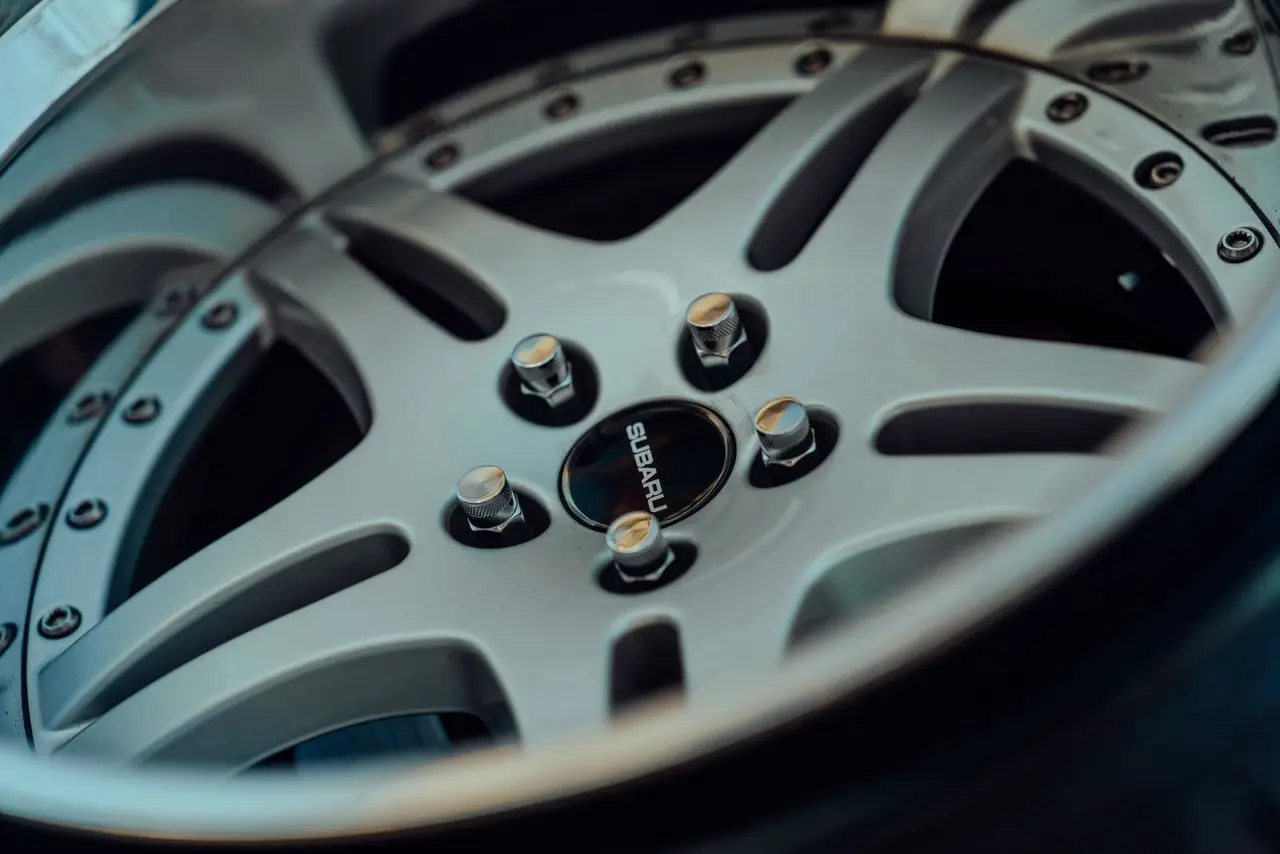
Knowing how to find your bolt pattern is the first step before buying rims, a winter wheel set or a tire and rim package. Get it wrong and the wheel will not go on. Get it almost right and the wheel may bolt on but never sit properly, which is worse. We check wheel fitment every week at our NE Calgary shop, and this is the same process we walk customers through at the counter.
What Is a Bolt Pattern?
A bolt pattern, also called a lug pattern or PCD (pitch circle diameter), describes how the studs or bolts are arranged on your hub. It is written as two numbers: the number of lugs, then the diameter of the imaginary circle that runs through the centre of each one.
So 5x114.3 means five lugs on a circle 114.3 mm across. You will also see imperial versions such as 5x4.5, which is the same pattern in inches. A few common examples: many Ford F-150 trucks use 6x135, most modern Audi and Mercedes-Benz models use 5x112, and the Ford Mustang uses 5x114.3.
How to Find Your Bolt Pattern Without Measuring
Measuring is a last resort. Try these first:
- Owner's manual: usually in the specifications section near the back.
- The back of your current wheels: many alloy rims have the bolt pattern, offset and size cast or stamped inside the spokes.
- A fitment lookup by year, make, model and trim: trim matters, because the same model can change patterns between generations.
- Ask us: call (587) 894-3516 with your vehicle details. We check fitment before every wheel order anyway.
How to Tell What Size Pattern You Have
The first number is easy: count the studs or lug holes. Four, five, six and eight are the common counts on cars, SUVs and light trucks. The second number, the circle diameter, is the one that needs care, because many patterns are only a few millimetres apart. A 5x112 and a 5x114.3 look almost identical by eye.
That is why we never order wheels from a measurement alone. Use your tape or caliper to narrow it down, then confirm with a lookup or with us. While you are at it, note your tire size too; our guide on how to read tire size explains the sidewall code.
How to Measure Your Bolt Pattern
Take the wheel off or measure the studs on the hub. A caliper is more accurate than a tape, and a cheap bolt pattern gauge is the most reliable of all. Measure at least twice, or bring the car to our NE Calgary shop and we will check it for you.
Measuring a 4-Lug Pattern
Four studs form a square, so two always sit directly across from each other. Measure from the centre of one stud straight across the hub to the centre of the opposite stud. That distance is the bolt circle diameter. Common results are 100 mm and 114.3 mm.
Measuring a 5-Lug Pattern
Five-lug patterns are the tricky ones, because no stud sits directly across from another. Pick any stud, skip the one next to it, and measure from the back (outer edge) of the first stud to the centre of the stud two positions over. This gives a close approximation. Because 5-lug patterns sit so close together, a gauge is worth using here.
Measuring a 6-Lug Pattern
Six studs form a hexagon with opposite pairs, so measure centre to centre straight across, just like a 4-lug hub. On trucks the common results are 135 mm and 139.7 mm, which are close enough that a careful measurement matters.
Measuring an 8-Lug Pattern
Heavy-duty pickups use eight lugs. Again, measure centre to centre across the hub between two opposite studs. Common results are 165.1 mm and 170 mm, and a few trucks use 180 mm. These wheels are heavy, so measure on the hub if the wheel is still mounted.
How to Convert a Bolt Pattern Between mm and Inches
Divide millimetres by 25.4 to get inches, or multiply inches by 25.4 to get millimetres. The lug count never changes. Here are the conversions we get asked about most:
| Metric (mm) | Imperial (inches) |
|---|---|
| 4x100 | 4x3.94 |
| 4x114.3 | 4x4.5 |
| 5x100 | 5x3.94 |
| 5x10⁸ | 5x4.25 |
| 5x112 | 5x4.41 |
| 5x114.3 | 5x4.5 |
| 5x120 | 5x4.72 |
| 5x127 | 5x5 |
| 6x135 | 6x5.31 |
| 6x139.7 | 6x5.5 |
| 8x165.1 | 8x6.5 |
| 8x170 | 8x6.69 |
Watch out for near-misses. 5x114.3 and 5x115 are not the same, and neither are 5x120 and 5x120.65. A wheel can sometimes be forced onto a hub that is a millimetre off and even tighten down, but the studs get pulled sideways and the nuts can work loose.
The Most Common 5-Lug Patterns
Five lugs cover the majority of cars and crossovers we see in the bay. The patterns that come up most often:
- 5x114.3: a very wide range of Japanese, Korean and domestic cars and crossovers, including the Honda CR-V, Toyota RAV4 and Ford Mustang.
- 5x112: most modern Audi, Mercedes-Benz and Volkswagen models, and most BMW models from about 2017 on.
- 5x10⁸: most modern Volvo models, the Ford Escape and the Range Rover Evoque.
- 5x120: many earlier BMW models and the Range Rover and Range Rover Sport.
- 5x127: Jeep Wrangler, Gladiator and Grand Cherokee.
- 5x100: the Toyota Corolla and Subaru Impreza and Crosstrek.
The pattern is only half the fitment story. Centre bore, offset, lug seat type and TPMS compatibility all have to match too. Our guide to wheel offset explained covers the next step.
Bolt Pattern Reference Chart
Save or print this chart of common, well-established patterns. It is a starting point, not a final answer: years and trims vary, so always confirm your exact specs with us before ordering.
| Bolt pattern | Lugs | Common examples |
|---|---|---|
| 4x100 | 4 | Many older compact cars |
| 5x100 | 5 | Toyota Corolla, Subaru Impreza and Crosstrek |
| 5x10⁸ | 5 | Most modern Volvo models, Ford Escape, Range Rover Evoque |
| 5x112 | 5 | Most modern Audi, Mercedes-Benz and VW; BMW from about 2017 |
| 5x114.3 | 5 | Honda CR-V, Toyota RAV4, Ford Mustang, Ford Explorer (2011+) |
| 5x120 | 5 | Many earlier BMW models, Range Rover and Range Rover Sport |
| 5x127 | 5 | Jeep Wrangler, Gladiator and Grand Cherokee |
| 6x135 | 6 | Ford F-150 |
| 6x139.7 | 6 | Chevrolet Silverado 1500, GMC Sierra 1500, Toyota Tacoma |
| 8x170 | 8 | Ford Super Duty (F-250, F-350) |
Shopping for a second set for winter? Our winter wheels and rims in Calgary are ordered by bolt pattern, size and finish. If you would rather skip the measuring, ask about tire and rim packages: we match wheels, tires, hardware and sensors to your vehicle and mount and balance everything.
We Can Help You Confirm Your Fitment
Not sure about your bolt pattern, centre bore or offset? Call (587) 894-3516 with your year, make, model and trim, or drive in to 227 41 Ave NE, Monday to Saturday, 9 to 6. We check fitment before any wheel is ordered.
FAQ: Bolt Patterns
What is a wheel bolt pattern?
A wheel bolt pattern is the number of lug holes and the diameter of the circle they sit on, such as 5x114.3. It has to match your hub exactly.
How do I measure a 5 lug bolt pattern?
On a 5 lug bolt pattern you cannot measure straight across. Measure from the centre of one hole to the far edge of a hole that is not next to it, or use a bolt pattern gauge.
What is the most common bolt pattern?
There is no single winner, but 5x114.3 is found on a very wide range of Japanese, Korean and domestic cars and crossovers. European brands often use 5x112 or 5x120, and many pickups use six-lug patterns such as 6x135 or 6x139.7. Always check your exact year and trim, because patterns change between generations.
Is PCD the same as bolt pattern?
Yes. PCD stands for pitch circle diameter, the diameter of the circle that passes through the centre of every stud or bolt. Bolt pattern, lug pattern and PCD all describe the same thing. It is written as lug count by diameter, for example 5x112, usually in millimetres.
Can I use wheels with a slightly different bolt pattern?
Not safely without the right parts. Even a millimetre or two of difference pulls the studs sideways when the nuts are tightened, so the wheel does not seat evenly and can loosen. Properly engineered adapters exist for some cases, but they must be chosen and installed correctly. The simplest answer is wheels in your exact pattern.
Where is the bolt pattern written on a wheel?
On many alloy wheels it is cast or stamped on the back of the spokes or inside the barrel, often next to the wheel size, offset and part number. Steel wheels sometimes have it stamped near the valve hole. If you cannot find it, your owner's manual or a fitment lookup by year, make, model and trim is the next step.
Do I need hub-centric rings?
You need them when the wheel's centre bore is larger than your vehicle's hub. The ring fills the gap so the hub, not only the lug nuts, centres the wheel. Without one, the wheel can sit slightly off-centre and cause a vibration that feels like a balance problem. Many aftermarket and replica wheels have a larger bore to fit several vehicles.
Can two different car brands share a bolt pattern?
Yes, often. For example, 5x114.3 is shared by many brands, and 5x112 by several European makers. A matching pattern does not mean the wheel will fit properly, though. Centre bore, offset, lug seat type and brake clearance all have to suit your vehicle, so confirm every spec before you buy a used set from a different make.