
New to Calgary? Your First-Month Car Checklist

Why Your First Month Here Sets Up Your Whole Year
A lot of the people who walk into our NE Calgary shop have just arrived, from Ontario, from B.C., or from the other side of the world. The questions are almost always the same, so we turned them into a new to Calgary car checklist. Work through it in your first few weeks and your car will be ready long before the first real cold snap.
Why the rush? Calgary sits over 1,000 metres up, right against the foothills. Snow can show up in September and still be falling in May, and a Chinook can swing the temperature from -20°C to +10°C in a day. That freeze-thaw cycle is what fills Deerfoot and Stoney Trail with potholes and gravel. None of it is scary once you are prepared, but it does punish a car that arrives set up for a mild coast.
The other reason is timing. Shops, registries and insurance offices all get busier as winter gets closer. If you move in summer, you have the calm weeks to get organised. If you move in October, you are already late for tires, so start at the top of the list.
Your New-to-Calgary Car Checklist
Here is the order we would tackle things in, based on what we see go wrong in the bay every fall.
- Book winter tires early. All-season rubber stiffens below about 7°C, which describes most of October to April here. Proper winter tires in Calgary carry the three-peak mountain snowflake symbol and grip on snow, slush and ice. Book your changeover in September or early October, before the first snowfall fills every shop in the city. Our guide on when to put winter tires on in Calgary covers the timing.
- Check what tires you actually have. Cars bought from dealers down east or on the coast often come on summer or tired all-season tires. Read the sidewall, or bring the car in and we will measure the tread and read the date code with you. Our guide on how to read tire size explains the markings.
- Sort insurance, then registration. In Alberta a vehicle needs valid insurance before it can be registered, and registration and licensing are handled by registry agent offices around the city. A vehicle coming from another province usually needs an out-of-province inspection first. Rules depend on where you are coming from, so confirm the details with a registry agent.
- Find the block heater cord. Most cars sold in Alberta have one, usually a plug tucked behind the grille. A common rule of thumb is to plug in around -15°C or colder, for a few hours before you drive. An outdoor timer saves power.
- Test the battery before winter. Weak batteries tend to quit on the first truly cold morning. If yours is several years old, get it tested in the fall.
- Get an oil change with the right grade. Fresh oil of the grade your manual calls for flows better on a frozen morning. Many drivers book an oil change in the fall, before the -30°C starts.
- Deal with windshield chips right away. Gravel on Deerfoot and the Trans-Canada chips glass all year. Cold glass, a hot defroster and Chinook swings can turn a small chip into a long crack overnight.
- Set your tire pressure for the cold. Tires lose roughly 1 psi for every 5 to 6°C drop. Check them cold, against the sticker in the driver's door jamb, and expect the pressure light on the first cold morning. Here is why the TPMS light comes on in cold weather and what to do about it.
- Pack a winter kit. Brush and scraper, small shovel, gloves, blanket, booster cables and a phone charger. Keep the tank at least half full, especially before a trip to Banff.
- Save a shop you trust. Read reviews, look for clear explanations and straight quotes, and pick somewhere with a real address and regular hours.
Your Driveway and Garage in a Calgary Winter
Where your car sleeps matters almost as much as what it rolls on. A lot of newcomers are moving into their first place with a driveway, a garage or an assigned outdoor stall, and each one comes with its own winter habits.
If you park outside, check that your stall or driveway has a working outdoor outlet for the block heater, and use a proper outdoor-rated cord. Check the cord for cracks every fall, because frozen, brittle insulation is a real hazard. If you have a garage, even an unheated one keeps the car out of the wind, which makes cold starts easier and saves you scraping frost off the glass.
- Store your off-season tires properly. Clean them, keep them out of the sun and away from furnaces or anything that makes ozone, and stack or hang them in a cool, dry corner. Labelling each tire with its position makes the next tire change quicker.
- Watch the melt. Salt and gravel ride into the garage on your tires and wheel wells. Sweep it out now and then, since standing salty water is hard on concrete and on anything stored on the floor.
- Mind the slope. Sloped driveways turn to glare ice after a Chinook melt freezes overnight. Winter tires help, and so does a bag of ice melt or grit by the door. Back out slowly and let the tires find grip before you turn the wheel.
- Keep the garage door clear. Snow and ice build up along the bottom seal and can freeze the door shut on a cold night. Clear it after a storm so you are not stuck inside on a -25°C morning.
- Clear the sidewalk. The City expects residents to clear the public sidewalk in front of their home soon after a snowfall ends. Check the City of Calgary's current rules, and watch for snow route parking bans if you park on the street.
One more habit worth starting: give the car a quick walk-around when you plug it in. A tire that looks low in the garage at night is much easier to deal with than one you discover at -25°C on the way to work.
Why Newcomers in NE Calgary Choose Shah Tires
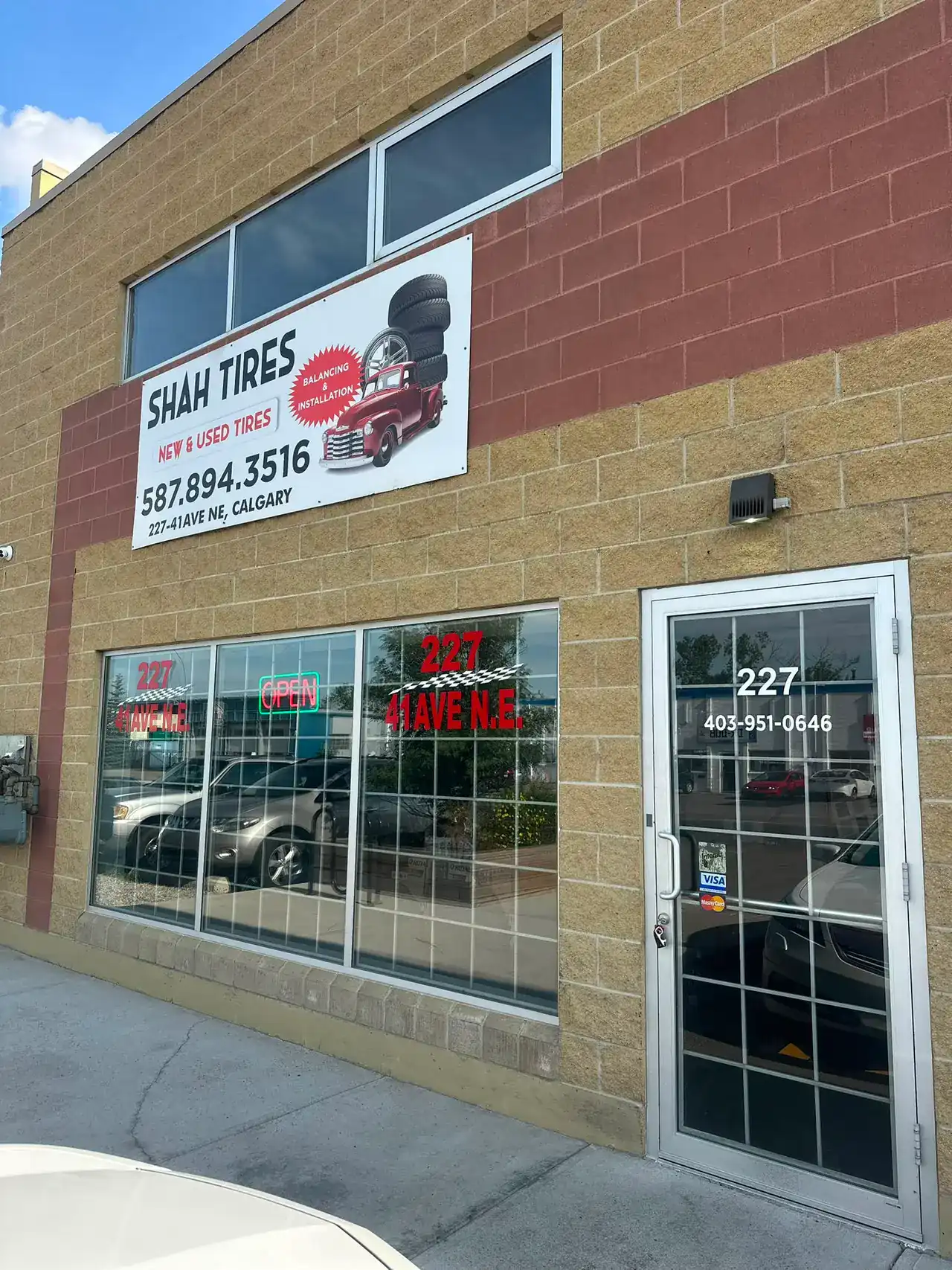
We are an independent shop at 227 41 Ave NE, just east of Centre St N and a few minutes from McKnight Blvd, Deerfoot Trail and the airport. We have over 15 years of tire experience and a 4.8★ rating from more than 232 Google reviews, and we explain things the way we would to a friend who just moved here.
We keep budget-friendly new tires in common sizes, sell inspected used winter tires for drivers watching their first-year budget, and can order major brands. Financing and payment plans are available, subject to approval; ask us for current options. We are open Monday to Saturday, 9 AM to 6 PM, and closed Sunday. Find us and get directions, or just call ahead with your tire size.
We Can Help You Get Your Car Calgary-Ready
New to the city and not sure what your car needs? Call (587) 894-3516 or drive in Monday to Saturday, 9 to 6. We will check your tires, pressures and tread and give you a straight answer.
FAQ: New to Calgary Car Checklist
What should be on my moving to Calgary checklist for my car?
Put winter tires, an emergency kit, a block heater cord and a windshield check on your moving to Calgary checklist.
Do I really need winter tires in Calgary?
They are not required by law in Alberta, but we recommend them for almost every driver. Snow can fall from September to May, and all-season tires lose grip once it drops below about 7°C. Winter tires stop shorter on snow, slush and ice. Some insurers may offer a discount for them, so ask your provider.
When should I book my first tire changeover?
Aim for late September or early October, or once daytime highs sit around 7°C. The week after the first snowfall is the busiest of the year for every shop in the city, so booking ahead saves you a long wait. If you already have winter tires on rims, the swap is quick.
How do I register a car I brought from another province?
We are a tire shop, so treat this as a pointer only. You will need valid Alberta insurance, and a vehicle registered outside Alberta usually needs an out-of-province inspection before it can be registered here. Registry agent offices handle registration and licensing. Contact one directly for the current documents and steps for your situation.
When should I plug in my block heater?
A common rule of thumb is to plug in when it is around -15°C or colder. Two to four hours before you leave is usually enough to warm the engine and coolant, and an outdoor timer means you do not have to leave it on all night. Always use an outdoor-rated extension cord in good condition.
How should I store my summer tires in the garage?
Clean them, let them dry and keep them out of direct sunlight. Store them away from furnaces, water heaters and electric motors, which give off heat and ozone. Tires on rims can be stacked or hung; tires without rims are best stood upright. Mark each one with its position so rotation is easy next season.
Where can I get affordable winter tires as a newcomer?
Look at budget-friendly new tires and inspected used winter tires with good tread. At our NE Calgary shop we carry new tires in common sizes, sell used tires and rims, and can source other sizes. Financing and payment plans are available, subject to approval. Call (587) 894-3516 with your size for current pricing.